Jesus stickers that mention immigration, welfare, unions, or Donald Trump are built around a contradiction. American right-wing movements frequently claim Christian identity. The stickers compare that claim with Gospel teachings about poor people, strangers, enemies, wealth, mercy, and power.
They are satire, not neutral theology. Their argument is that religious language should be tested against conduct.
The Contrast Begins With a Public Claim
Satire needs a claim to test. In this case, politicians and movements use Bibles, crosses, prayer, church language, and descriptions of America as a Christian nation. Those symbols invite a basic question: what does “Christian” require?
The sticker answers with a teaching or story. Feed the hungry. Welcome the stranger. Love the neighbor. Serve rather than dominate. The humor comes from placing that familiar language beside a policy the designer sees as inconsistent with it.
Why Immigration and Welfare Appear So Often
Matthew 25 identifies Jesus with the hungry, sick, imprisoned, poorly clothed, and stranger. The Good Samaritan makes an outsider the moral example. These passages do not write a modern immigration code or federal budget, but they make exclusion and indifference difficult to treat as morally empty.

“Would Jesus Cut School Lunches?” Bumper Sticker
This question does not claim that scripture contains a school-meal statute. It asks how a movement invoking Jesus weighs budget savings against feeding children.
Stickers Compress a Sermon Into a Collision
A sticker has seconds to work. It places two recognizable ideas together and lets the contradiction create the meaning. Jesus plus a border fence. Jesus plus a welfare cut. Jesus plus a union line. Jesus plus “WWJD?” followed by an answer that is obviously annoyed.
This follows the same tradition described in how political slogans spread. The image does not replace context. It makes the question hard to ignore.

The Target Is Political Christianity, Not Every Christian
Christians span parties, nations, races, denominations, and political traditions. Many religious people criticize Christian nationalism because they believe it distorts their faith. Others believe conservative policy better reflects biblical morality.
The strongest satire identifies the specific contradiction instead of treating all Christians as hypocrites.

“Jesus Broke Bread, Not Unions” Sticker
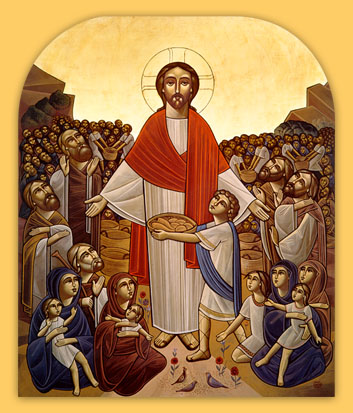
The line joins the bread stories of Jesus with modern labor solidarity. It is playful historical compression, not proof that Jesus endorsed a modern labor statute.
Frequently Asked Questions
Are these stickers anti-Christian?
Not necessarily. Many use Christian scripture as the standard for criticizing political behavior.
Do the stickers claim Jesus was a Democrat?
They should not. Jesus lived in a different political world and cannot be placed cleanly inside a modern party.
Why use profanity with religious imagery?
Profanity creates shock and rejects polite religious branding. Some viewers find it effective; others find that it distracts from the argument.
Why are right-wing policies the target?
Because the modern American right frequently claims Christian authority, creating a direct opening for scriptural comparison.
Satire Asks the Claim to Prove Itself
The best Jesus stickers do not settle theology. They force a public religious claim to stand beside the people and conduct it affects.
Browse the WWJD Stickers, Religious Satire, Funny Jesus Stickers, and Anti-ICE collections.
Related Reading
Jesus’s Teachings vs. Christian Nationalism: The theology behind the contrast.
What Would Jesus Say About Christian Nationalism?: What can and cannot be inferred from the Gospels.
How Political Movements Misuse Christianity: How sacred symbols become political tools.
Why Jesus Challenges Political Hypocrisy: Why the comparison has lasted.
Sources: Smithsonian, Religion in Early America; PRRI and Brookings, Christian Nationalism Survey; Matthew 5–7, Matthew 25, Luke 10, John 13.
About Quietly Loud Prints
Quietly Loud Prints designs original parody, activist, educational, and political stickers inspired by history, humor, and grassroots movements. Our goal is to create thoughtful designs that help people express ideas through everyday objects.