Here's a fact that surprises most people the first time they hear it: the U.S. Constitution does not explicitly guarantee equal rights regardless of sex. The 19th Amendment guarantees the vote. That's it. Everything else, workplace protection, reproductive privacy, freedom from discrimination, has been built on court interpretation and federal statute rather than a direct constitutional guarantee. That gap is not an accident, and in 2026 it's the reason so many rights that felt permanently settled are back up for grabs.
The Amendment That Still Isn't Part of the Constitution
The Equal Rights Amendment was first introduced in Congress in 1923. It finally passed both chambers in 1972 and went to the states with a ratification deadline of 1979, later extended to 1982. It fell three states short by that deadline and functionally stalled for almost forty years.
Then Nevada ratified in 2017. Illinois followed in 2018. Virginia became the 38th and final state needed in January 2020, technically clearing the three-fourths threshold required by Article V. The Archivist of the United States refused to certify it anyway, citing Justice Department opinions that the original deadline had already expired and the amendment was no longer legally eligible.


"If the Law Protects Cruelty, Question The Law" Resist Sticker
Part of our Resist Stickers collection, this design speaks directly to the point above.
This is still being fought in court right now, not in some abstract historical sense. In Equal Means Equal v. Trump, arguments were heard in a Massachusetts federal court in March 2026 over whether the ERA is already part of the Constitution. A related case, Valame v. Trump, already went the other way at the Ninth Circuit and is currently on appeal. Two federal courts are actively disagreeing about whether the 28th Amendment already exists. That's not a settled question. That's a live one.
Why the ERA Actually Matters
It's tempting to treat this as a procedural fight over paperwork. It isn't. Without an explicit constitutional guarantee, protections against sex discrimination rely on how courts choose to interpret existing amendments, mainly the 14th Amendment's equal protection clause, plus whatever federal statutes Congress has passed and hasn't repealed. Statutes can be changed by a simple majority in Congress. Court interpretation can shift with new appointments. A constitutional amendment is much harder to undo, which is exactly why it matters, and exactly why it's been fought over for a century.
The Privacy Right That Roe Actually Rested On
Roe v. Wade in 1973 wasn't built on a standalone "right to abortion" written into the Constitution. It was built on a constitutional right to privacy, first recognized in Griswold v. Connecticut in 1965, which struck down a law banning contraception for married couples. That same privacy reasoning underpins Obergefell v. Hodges, the 2015 marriage equality decision.
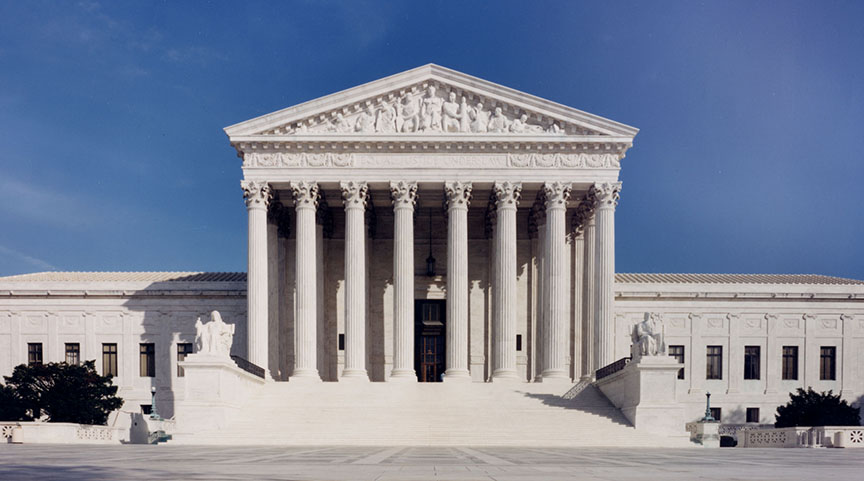
When Dobbs overturned Roe in 2022, the majority opinion insisted the ruling was specific to abortion and wouldn't disturb other rights built on the same privacy reasoning. Justice Clarence Thomas wrote a concurring opinion explicitly disagreeing with that limit, stating the Court should reconsider Griswold, Lawrence v. Texas (which struck down sodomy bans), and Obergefell using the same legal logic that ended Roe. That's not a fringe legal theory. That's a sitting justice, in an official opinion, naming the specific cases he thinks should be next.
The Discrimination Gap Nobody Talks About
Race discrimination gets explicit constitutional treatment through the 14th Amendment as it's been interpreted since Reconstruction. Sex discrimination gets a lower standard of judicial scrutiny, a legal technicality that sounds small and isn't. Courts apply a tougher test when race is the basis of unequal treatment than when sex is, which means laws that treat men and women differently survive legal challenges more easily than laws that treat races differently, even when the underlying unfairness looks similar on paper.
Federal statutes fill some of this gap. Title VII bans workplace sex discrimination. The Pregnancy Discrimination Act adds pregnancy-specific protection on top of that. But statutes are narrower than constitutional rights, easier to carve exceptions into, and entirely dependent on whichever Congress and administration happens to be in charge of enforcing them.
Voting Rights Aren't Untouchable Either
The 19th Amendment guarantees the right to vote regardless of sex. It says nothing about voter ID requirements, registration purges, or district lines, all of which can affect women's voting access in practice even though the constitutional right itself stays formally intact. Voter ID laws that don't account for name changes after marriage or divorce disproportionately create friction for women at the polls. This is a good example of a right that's constitutionally guaranteed on paper while still being practically narrowed through the mechanics of how elections actually get run.
At Quietly Loud Prints, this is the pattern we keep coming back to across this entire series. A right doesn't have to be formally repealed to be effectively taken away. It just has to get harder and harder to actually exercise.

What a Ratified ERA Would Actually Change
If the ERA were recognized as the 28th Amendment, sex discrimination claims would get the same strict legal scrutiny race discrimination claims already get, a genuinely higher bar for the government to clear before a law treating men and women differently could survive a court challenge. It wouldn't automatically restore Roe or override every state abortion law. But it would give reproductive rights, pay equity, and other sex-discrimination claims a constitutional foundation instead of a statutory one, which is a fundamentally sturdier place to stand.
Frequently Asked Questions
Is the ERA part of the Constitution right now or not?
Legally contested. Virginia's 2020 ratification technically met the three-fourths threshold, but the Archivist of the United States has refused to certify it, and federal courts are actively split on the question as of 2026, with cases pending in multiple circuits.
Why does a right to privacy matter for abortion specifically?
Roe wasn't based on an explicit constitutional right to abortion. It was based on a right to privacy first established in Griswold v. Connecticut. Dobbs overturned the abortion-specific application of that reasoning, and a sitting Supreme Court justice has explicitly called for revisiting the same reasoning as it applies to contraception and marriage equality.
Doesn't Title VII already protect against sex discrimination at work?
Yes, but it's a federal statute, not a constitutional guarantee. Statutes can be amended, narrowed by court interpretation, or under-enforced by an administration in a way a constitutional right is much harder to unwind.
How does voting access get affected without repealing the 19th Amendment?
Through the practical mechanics of running elections: voter ID rules that don't account for name changes, registration purges, and district lines can all create friction that falls disproportionately on women, even while the underlying constitutional right to vote stays technically intact.
Related Reading
The Roe Effect: How America Repeats Its History of Erasing Women's Rights: Women's rights in America have never moved in a straight line.
The Maternal Health Crisis: Why Limiting Abortion Access Is Limiting Women's Medical Freedom: Abortion bans don't just restrict abortion.
Gutting Title IX: What Losing Educational Protections Means for Young Women: Title IX did more than fund women's sports.
Sources: National Constitution Center, "Lawsuits argue Equal Rights Amendment is valid constitutional amendment," March 2026; Supreme Court of the United States, Griswold v. Connecticut (1965), Roe v. Wade (1973), Lawrence v. Texas (2003), Obergefell v. Hodges (2015), Dobbs v. Jackson Women's Health Organization (2022), including Justice Thomas's concurring opinion in Dobbs; Equal Means Equal v. Trump, U.S. District Court for the District of Massachusetts; Valame v. Trump, Ninth Circuit Court of Appeals; National Archives, Equal Rights Amendment ratification history
About Quietly Loud Prints
Quietly Loud Prints designs original parody, activist, educational, and political stickers inspired by history, humor, and grassroots movements. Our goal is to create thoughtful designs that help people express ideas through everyday objects.