Americans like to think of rights as a one way street. Once you win one, it's yours for good. Women's history in this country tells a different story. Every major win, the vote, birth control, legal abortion, workplace protection, has been followed by an organized, well funded effort to claw it back. Roe v. Wade getting overturned in 2022 wasn't a break from the pattern. It was the pattern, running exactly on schedule.
Before the Vote Was Even the Question
The fight for women's rights in America didn't start with voting, and treating 1920 as the starting line leaves out most of the story. Under a legal doctrine called coverture, a married woman in early America had no independent legal identity at all. She generally couldn't own property in her own name, sign a contract, keep her own wages, or get custody of her children in a divorce, because the law treated her legal existence as absorbed into her husband's. The 1848 Seneca Falls Convention, the event usually shorthanded as "the birth of American feminism," addressed all of that directly. Its Declaration of Sentiments listed grievances covering property rights, wages, education, divorce, and custody right alongside the right to vote, because for the women who wrote it, voting was one item on a much longer list of basic legal personhood, not the whole point.
That context matters for understanding what "women's rights" has always actually meant. It was never primarily about pushing women into paid employment. Women worked extensively before any of this organizing began, in agriculture, textile production, domestic service, and family businesses. By 1900, roughly 5 million American women were already in the official labor force. By 1940, before the U.S. had even entered World War II, that number had grown to roughly 13 million. The core demand behind Seneca Falls and everything that followed wasn't "women should work." It was "women should have the same legal standing over their own lives, property, and decisions that men already had."
A related myth worth retiring directly: the idea that women's rights were promoted mainly so governments could double their income tax base doesn't hold up against the actual timeline. The 16th Amendment establishing the federal income tax passed in 1913. The 19th Amendment passed in 1920. In the years between, fewer than 1% of Americans paid any federal income tax at all. Mass taxation didn't arrive until the Revenue Act of 1942 and the payroll withholding system that followed it, two full decades after women's suffrage, and it was driven by wartime financing needs, not by an attempt to tax newly enfranchised women. The chronology simply doesn't support that explanation, however often it gets repeated.
Win, Then Backlash: The Suffrage Blueprint
The 19th Amendment passed in 1920, guaranteeing women the vote after more than seventy years of organizing. Almost immediately, the backlash machine started up. States passed laws restricting married women's ability to own property or sign contracts independently. Employers used "protective" labor laws, originally framed as looking out for women, to justify paying them less and barring them from higher paying jobs entirely. The post-WWII years brought a coordinated cultural campaign pushing women back out of the workforce and into "the home is where she belongs" messaging, undoing a lot of the economic independence women had gained working wartime jobs.


"Still Love My Country Just Not The Lies" Activism Sticker
Part of our Activism Quotes collection, this design speaks directly to the point above.
This is the blueprint that keeps repeating. Win a legal right, then fight a slower, quieter war to make that right functionally unusable.
The Second Wave, and the Rollback That Followed It
Griswold v. Connecticut in 1965 established a constitutional right to privacy that protected married couples' access to birth control. Roe v. Wade in 1973 extended that privacy right to cover abortion. These were genuine, hard fought wins. The backlash arrived almost immediately and never really stopped.
The Hyde Amendment passed in 1976, just three years after Roe, banning federal Medicaid funding for abortion except in narrow cases. That single amendment did more to restrict actual abortion access for low income women than any outright ban could have, since it didn't need to touch Roe's legal protections at all. It just made the right meaningless for anyone who couldn't pay out of pocket. This is worth sitting with: the first major rollback of abortion rights in America targeted poor women specifically, and it worked by attacking funding rather than legality.
Operation Rescue and similar groups spent the 1980s escalating from protest to outright clinic blockades and violence. State legislatures spent the same decades passing waiting periods, mandatory counseling requirements, parental consent laws, and increasingly strict clinic regulations, TRAP laws, designed to shut providers down on paper rather than by outright banning the procedure.
Death by a Thousand Cuts
By the 2000s, the strategy had fully shifted from frontal assault to slow strangulation. State after state passed laws requiring abortion clinics to have hospital-admitting privileges, hallway widths matching outpatient surgery centers, or other requirements with no medical justification, all designed to force clinics to close under the weight of compliance costs rather than get banned outright.
Public opinion barely moved during this period. Majority support for legal abortion access held roughly steady for decades. The laws moved anyway. That gap between what most Americans wanted and what state legislatures actually passed is the whole story of this era in miniature: rollback doesn't require majority support, it just requires enough state-level control and enough patience.
Dobbs: The Blueprint's Final Move
Then came Dobbs v. Jackson Women's Health Organization in 2022, which didn't just chip away at Roe, it erased the constitutional right entirely and handed the question back to the states. Within weeks, states with pre-written "trigger laws" banned abortion outright. This wasn't improvised. Some of these laws had been sitting on the books for years, waiting for exactly this ruling.
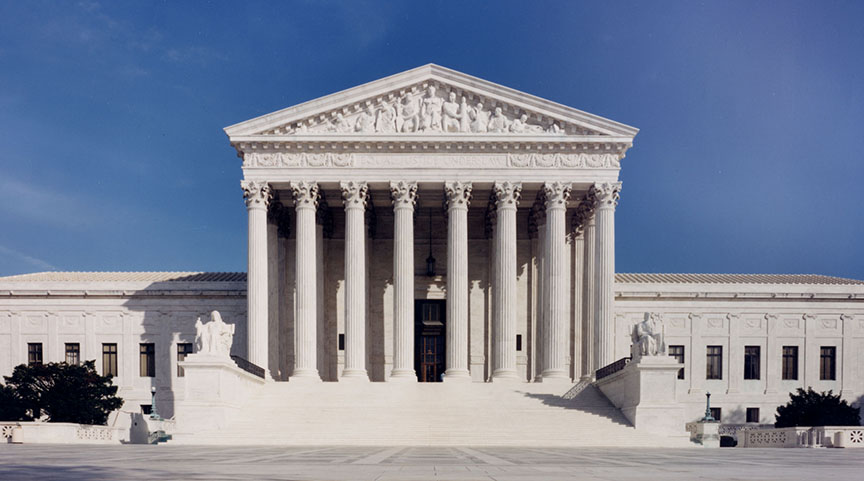
What makes Dobbs different from earlier rollback efforts isn't the strategy, it's the speed. Instead of decades of incremental restriction, an entire constitutional right disappeared in a single ruling, and the state-level chaos that followed hit women in real time rather than gradually.
The ERA That Still Isn't Ratified
Here's a rollback most people don't even know happened, because it's a rollback by omission. The Equal Rights Amendment, a simple constitutional guarantee of equal rights regardless of sex, was first introduced in Congress in 1923. It finally passed Congress in 1972 and went to the states for ratification. A well organized opposition campaign, led in large part by Phyllis Schlafly, argued the ERA would somehow force women into combat and strip away protections like alimony. It fell three states short of ratification by the 1982 deadline.

A hundred years after it was first proposed, the ERA still isn't part of the Constitution. That's not really a story about one failed amendment. It's a story about how long this country can leave a basic equality guarantee unfinished without most people even noticing it never happened.
At Quietly Loud Prints, we think that gap, between what most people assume is already legally settled and what actually is, deserves way more attention than it gets.
What Makes This a Pattern and Not a Coincidence
Three things repeat across every rollback cycle in this history. First, the attacks rarely come as an outright, headline grabbing ban. They come as funding restrictions, procedural requirements, and slow bureaucratic strangulation, the Hyde Amendment model. Second, the people hit first and hardest are almost always the ones with the fewest resources to route around the restriction, poor women, women of color, rural women. Third, the public support for the underlying right usually doesn't move much. Rollback in this country has never required winning the argument. It just requires winning enough state legislatures and enough judicial appointments, then waiting.
Understanding that pattern matters because it changes what resistance looks like. If the rollback strategy is slow and procedural, the defense has to be just as sustained, not just a single election cycle of attention.
Frequently Asked Questions
Didn't Roe getting overturned come out of nowhere?
No. Legal scholars and reproductive rights organizations had been tracking this exact possibility for years, watching the composition of the Supreme Court and the pre-written trigger laws sitting ready in dozens of states. Dobbs was the culmination of a strategy that had been building for decades, not a surprise.
If most Americans support legal abortion, how do bans keep passing?
State legislatures don't have to reflect national public opinion evenly, especially in states with heavy gerrymandering or off-cycle special elections with low turnout. A well organized minority with control of state government can pass restrictions that a national majority opposes.
What happened to the Equal Rights Amendment?
It passed Congress in 1972 but fell three states short of the 38 needed for ratification by the original 1982 deadline. Several states have ratified it since, well past that deadline, and its legal status is still contested. It has never been added to the Constitution.
Is this rollback pattern unique to abortion rights?
No. The same funding-restriction, procedural-strangulation playbook shows up in voting rights, labor protections, and civil rights enforcement more broadly. Abortion access is one of the clearest examples because the timeline is so well documented, but it's not the only place this strategy gets used.
Related Reading
"Quiet, Piggy": How Trump Normalized Talking Down to Women Reporters: A documented look at how the president talks to female journalists compared to male ones, what researchers call political misogyny, and why the pattern matters.
After Roe: What Abortion Bans Mean for Women's Economic Independence: A look at the real economic cost of losing abortion access, from lost wages to medical debt to the poverty trap it creates for women who already have the least.
The Feminization of Poverty: Why Women Still Can't Close the Wage Gap: The wage gap isn't closing, it's just changing shape.
Sources: Library of Congress, "American Women: A Gateway to Library of Congress Resources for the Study of Women's History and Culture"; Guttmacher Institute, history of the Hyde Amendment and state-level abortion restriction tracking; Supreme Court of the United States, Griswold v. Connecticut (1965), Roe v. Wade (1973), Dobbs v. Jackson Women's Health Organization (2022); National Archives, Equal Rights Amendment ratification history; Pew Research Center, long-term polling on abortion attitudes
About Quietly Loud Prints
Quietly Loud Prints designs original parody, activist, educational, and political stickers inspired by history, humor, and grassroots movements. Our goal is to create thoughtful designs that help people express ideas through everyday objects.