The Claim
"Noncitizens don't have constitutional rights."
What the Terms Actually Mean
The Constitution uses two different words in different places: "citizen" (a narrower category, used for specific rights like voting) and "person" (used in the Fifth and Fourteenth Amendments' due process and equal protection clauses). Which word a given clause uses determines who it protects. That two-word distinction is why courts treat "is this person a citizen" and "is this person a person" as two entirely separate legal questions, even though casual political language often treats them as one.

The U.S. Supreme Court
The Court's 1982 ruling in Plyler v. Doe settled that constitutional "person" protections aren't limited to citizens. Photo: U.S. Office of War Information, public domain, via Wikimedia Commons.
What the Data Measure
This is a legal question, not a statistical one — settled by Supreme Court precedent rather than survey data. Courts, not pollsters, are the relevant record-keepers here, and their rulings — unlike survey data — carry direct, binding legal weight rather than merely describing public opinion.
What the Evidence Shows
Documented fact: In Plyler v. Doe (1982), the Supreme Court held that "whatever his status under the immigration laws, an alien is a 'person' in any ordinary sense of that term," and that the Fourteenth Amendment's protections apply to all persons within U.S. territorial jurisdiction "irrespective of whether they entered the country illegally." The Court specifically found no legally valid distinction, for constitutional purposes, between lawfully and unlawfully present immigrants. The Fifth Amendment's due process clause has been consistently read the same way: it applies to all persons, not just citizens. The Court reached the Plyler holding in the specific context of undocumented children's access to public education, but the underlying "person" reasoning it relied on has been applied far beyond that original case, including in immigration-detention contexts covered throughout this series.
What's Supported
Some rights genuinely are citizen-specific — voting in federal elections, for example, and certain federal employment and benefit eligibility categories. The claim isn't entirely without basis; it's overgeneralized. Congress has also drawn other citizenship-specific lines in areas like certain federal jobs requiring security clearances and eligibility for some public benefits, so the claim isn't inventing a category that doesn't exist anywhere in the law.
What's Missing or Misleading
Due process protections — including the detention-length limits from Zadvydas v. Davis covered in Article 26 of this series, and the basic right to a hearing before removal — apply regardless of citizenship status. Treating "noncitizen" as synonymous with "no constitutional protection at all" misstates settled law on the specific protections that matter most in the immigration-enforcement context this series covers, including the wrongful-detention pattern documented in our breakdown of "If ICE Detained Them, They Must Have Done Something Wrong". It also glosses over the fact that due process protections are precisely what make a wrongful-detention claim, like the ones covered in Article 19, legally actionable in the first place — without them, a mistaken detention of anyone, citizen or not, would have no clear legal remedy.
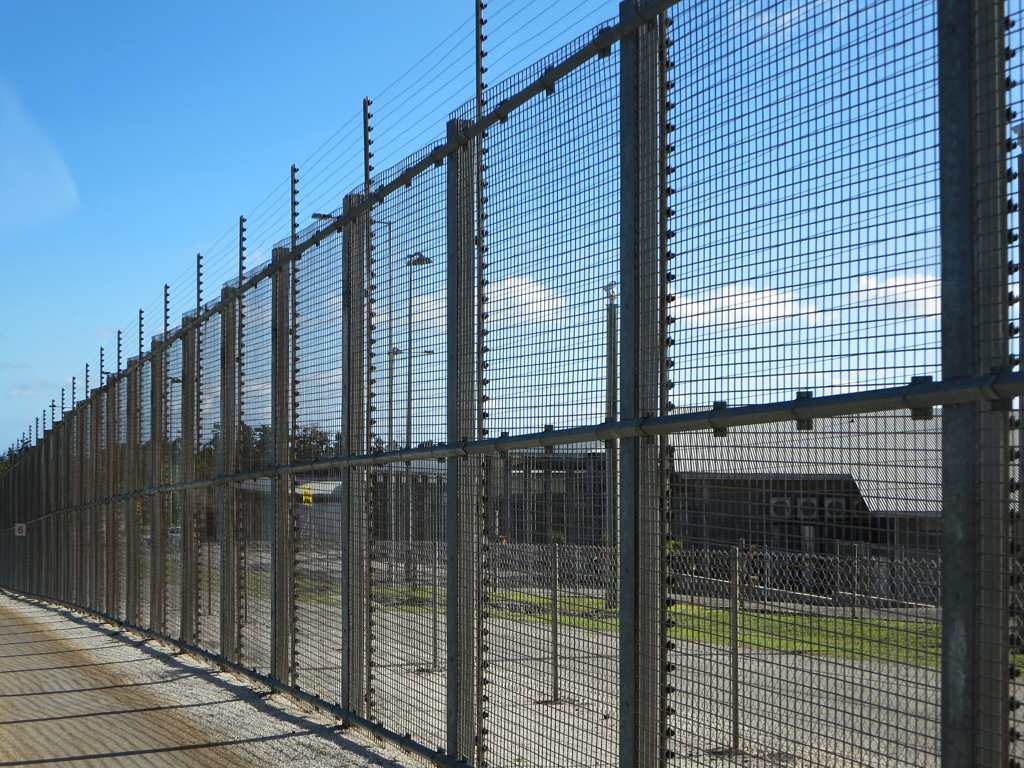
Detention Facility Perimeter
Due process protections apply to everyone held behind fencing like this, regardless of citizenship status. Photo: David Stanley, CC BY 2.0, via Wikimedia Commons.
Government/Other Response
This is settled Supreme Court precedent, not a live partisan dispute about what the law currently says — disagreement in this area tends to be about what process is due and how quickly, not about whether any constitutional protection applies at all. ICE's own public materials, available through its newsroom, do not dispute that detainees retain due process rights; disputes center on implementation. Even officials who favor a more aggressive enforcement posture tend to frame their arguments around how quickly or efficiently due process should be delivered, not around whether it applies at all, which is itself a tacit acknowledgment of the settled legal baseline.
Bottom Line
False as a blanket statement. Citizenship-specific rights exist, but core due process and equal protection guarantees extend to all persons in the United States regardless of immigration status, under precedent that hasn't been overturned. Readers encountering this claim should ask specifically which right is being discussed — voting is genuinely citizens-only, but due process and equal protection are not.
Quick Questions

"Ice Would Cage Jesus Too" Sticker
A blunt reminder that "person" protections were never supposed to have an asterisk next to them — this pro immigrant design puts the constitutional argument on a bumper instead of a brief.
➡ Browse the Anti-ICE Stickers Collection
Frequently Asked Questions

"All My Homies Hate ICE" Sticker
A laptop lid or water bottle is a fine place to keep the Plyler v. Doe argument handy for the next dinner-table debate about who counts as a "person."
➡ Browse the Anti-ICE Stickers Collection
Every Abolish Ice sticker and magnet purchase from our Anti-ICE Stickers collection helps fund the reporting and continued development of this public resource.
Related Reading
"If ICE Detained Them, They Must Have Done Something Wrong": fact-checks a related claim that treats detention itself as proof of guilt, which the same due-process protections discussed here directly undercut.
Can ICE Detain a U.S. Citizen?: the 170-plus documented wrongful-detention cases that make the "noncitizens only" framing especially consequential.
How Long Can ICE Detain Someone?: covers the Zadvydas v. Davis due-process time limit referenced above in full.
Sources: Plyler v. Doe, 457 U.S. 202 (1982), via Cornell Law School Legal Information Institute; Zadvydas v. Davis, 533 U.S. 678 (2001), via Cornell Law School Legal Information Institute (see Article 26 of this series).
About Quietly Loud Prints
Quietly Loud Prints designs original parody, activist, educational, and political stickers inspired by history, humor, and grassroots movements. Our goal is to create thoughtful designs that help people express ideas through everyday objects.